“Innovation opens up new vistas of knowledge and new dimensions to our imagination to make everyday life more meaningful and richer in depth and content”.
- Dr. A.P.J. Abdul Kalam
A primary mission of the University community is the exchange and generation of ideas ,
information, and knowledge. Discovery, learning, and societal engagement are mutually supportive core missions of any
research university around the world. Creativity since time immemorial had always been the backbone of
our civilization. It inspires man to invent and innovate that has made our life comfortable and better place to
live in. From waking up in the morning to going to bed at night, let us think how we are dependent on the
manifestations of creativity which made our lives so much cozy and convenient. Sometimes we fail to realize it
because we are so used to it. Intellectual Property Rights (IPR) is the tool to protect our creativity as an umbrella.
Creative idea is not adequate but it has to be expressed in some forms to get protected by various forms of IPR.
Need to promote and protect intellectual property (IP)
There are several compelling reasons.
First, the progress and well-being of humanity rest on its capacity to create and invent new works in the areas of
technology and culture. Second, the legal protection of new creations encourages the commitment of additional resources
for further innovation and future creation. Third, the promotion and protection of intellectual property spurs economic
growth, creates new jobs and industries, and enhances the quality and enjoyment of life. An efficient and equitable
intellectual property system can help to realize intellectual property’s potential as a catalyst for economic
development and social and cultural well-being. The intellectual property system helps strike a balance between the
interests of innovators and the public interest, providing an environment in which creativity and invention can
flourish, for the benefit of mankind.
Creativity & IP Ownership in Universities
All scholarly activities in universities are primarily creative endeavors and create new knowledge in any field of
inquiry and discipline and it consumes by the society including the stakeholders in universities to generate further
knowledge. Process continues indefinitely and endlessly. Production of knowledge as well as consumption of knowledge
both are subjected to different Intellectual Property Rights (IPR) acts. Creative output must be protected by the
appropriate IPR act in order to make it a perennial process otherwise free riders will destroy the basic spirit of
intellectual property and motivation of creativity will be dried up. 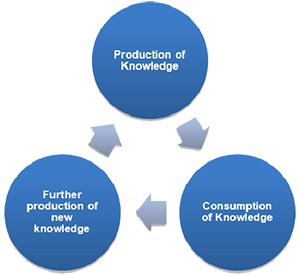
Why do we require to protect IP in the University
- It is well recognized that in today’s world sustained competitive advantage depends essentially on the ability of organizations to create, manage and market “value-added” knowledge-based or intellectual assets to derive “first in the market” advantage. As fountainheads of excellence and wellsprings of knowledge, educational institutions play a key role in developing and nurturing, in an organized manner, human resources needed for creating high value-adding employees and entrepreneurs for the marketplace.
- In the context of a widening and deepening university-industry interface, there has been a significant rise in industrial consultancy assignments, contract research, sponsored collaborations, and creation of cross-functional, multi-disciplinary teams with university and industry participation. Through such working relationships, the industry gains access to world-class research resources and the best of human minds while, at the same time, students, researchers and faculty in academic institutions discover an additional sense of purpose, gain exposure to demands of market realities, expand their knowledge base to create new products and technologies and also explore new career options. Such symbiotic relationships pave the way to productive knowledge networks, enrichment of the educational systems with the experiences and needs of the real business world, creation of well-prepared human resources, and, last but not the least, the nurturing of an innovation culture.
- A prerequisite for a harmonious working relationship between industry and academia is a clear, cogent and transparent framework for “ownership” of the new or original knowledge for “fair sharing of benefits” resulting from the commercial or business application of the research results of their joint endeavours. In a close working relationship, the collaborating partners need to freely share their respective knowledge, information and resources. To sustain creativity and innovation in such a working paradigm, using the system of intellectual property rights (IPRs) for fair and equitable sharing of benefits of new or original knowledge is a dire necessity in today’s environment. This requires a paradigm shift in the value system of researchers in academic institutions. Only then can they hope to learn the art of maximizing value creation and realize tangible financial benefits from their intellectual assets.
- Managing all types of knowledge-related activities such as, creating, using, sharing, accessing, valuing and trading, depends on a proper understanding and appreciation of the system of IPRs. Therefore, all features of the IPRs system are inseparable from that of knowledge management, as the IPRs system significantly influences the conception and strategic implementation of any research and development project or new product development project. Mapping ownership of knowledge ensures that there are no infringing overlaps and if there are any then appropriate arrangements are worked out to avoid disputes and litigation.
- It is, therefore, imperative that national government, the private sector, and academic institutions put in a focused and cooperative effort to speedily evolve guidelines for implementing IPRs policies in educational and publicly-funded Research and Development institutions.
- The primary aim of an institutional IPRs policy is to create an enabling environment that recognizes and values creativity and innovation, and simultaneously assists in translating these in an orderly fashion into products, processes and services for the widest public good.
A good institutional IPRs policy sets forth transparent guidelines and benchmarks forownership, protection and commercialization of the developed Intellectual Property (IP) while, at the same time, upholds the core moral values of students, academic researchers and faculty, such as integrity, merit, academic freedom, and pursuit of excellence. Such a formalized platform helps immensely in preparing the students, researchers and faculty alike to meet the growing demands of the emerging knowledge economy, and to synergies effectively the transfer of technology from the laboratory to industry and business for maximizing value realization of their creative and innovative output and results for the benefit of both the institution and themselves. Further, it helps to create an ambience that promotes and nurtures the emergence of new ideas, new lines of enquiry and research, scholarship and its practical application for solving technological problems; and this, in turn, promotes the emergence of the leaders and innovators of tomorrow.